
Where the world shrinks to a few square miles — and somehow grows larger than you ever imagined.
I never planned to become a citizen of the world this way.
No passport stamp marked the moment. No plane lifted me above the clouds toward some distant horizon I had always dreamed of. Instead, the world came to me — in waves, in families, and in languages I had never heard before, carrying griefs I recognized even when the words were foreign.
This place is not a country, but it holds many of them.
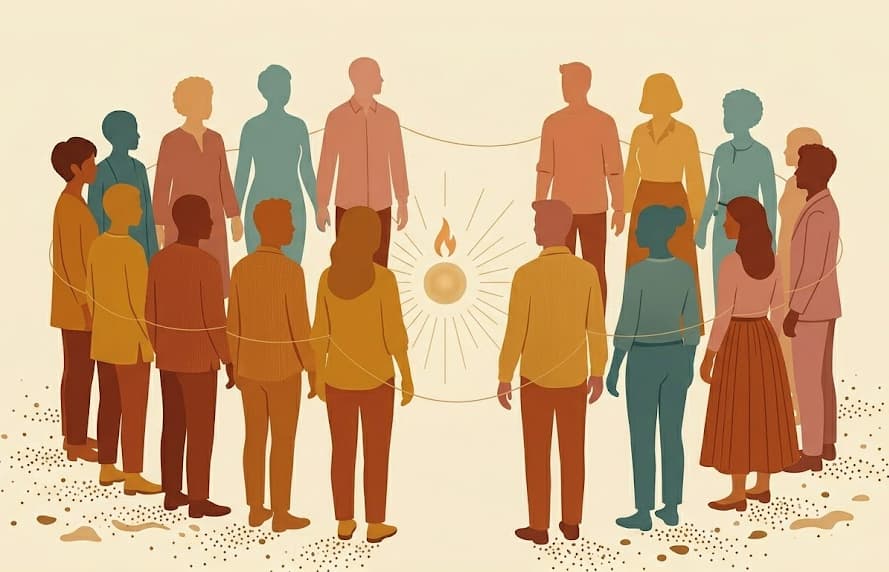
Walk far enough in any direction and you will hear Somali spoken with the urgency of a prayer, Amharic rising and falling like a song, Congolese French woven through with laughter that somehow survives everything, and South Sudanese voices that carry the weight of a history still being written. There are Ethiopians and Eritreans, Rwandans and Ugandans, and others whose names I am still learning to place on a map I carry only in my heart. More than ten nationalities live here—more than ten ways of seeing the sky above the same dusty ground.
The specific loneliness of the newcomer
When I first arrived, I will be honest — the differences felt louder than the similarities. The food smelled different from what my mother made. The greetings were different. The way people mourned, celebrated, and called their children home at dusk was all different. I was surrounded by people and yet still felt the specific loneliness of someone who does not yet know the language of the place where they are standing.
But loneliness, I have learned, is also a kind of doorway.
A gradual softening: finding shared humanity
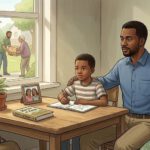
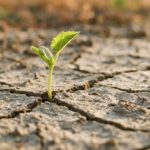
There was no single moment when it changed. It never is, with the things that matter most. It was slower than that — a gradual softening, like dry earth after the first rains. It was the Ethiopian neighbor who showed me, without being asked, how to find shade at the hottest hour. It was the Congolese woman whose singing I heard through a thin wall every morning for months before I finally asked her what she was singing. It was the South Sudanese boy who taught me three words of his language and laughed — not unkindly — when I mispronounced them all.
It was the discovery that grief, when carried by many hands, becomes lighter. Not gone. Never gone. But lighter.
I started paying attention differently. I started noticing that beneath all our different rhythms, we were all doing the same essential thing: we were trying to hold our humanity together in a place that had not been designed for us to thrive. We were trying to keep our children curious and our elders dignified and our own hearts from closing like fists.
That recognition — that shared, unspoken project — is what I have come to call cross-cultural connection. Not tourism. Not curiosity from a safe distance. But the real thing: the uncomfortable, beautiful, and necessary work of seeing yourself in someone whose story began nothing like yours.
Lessons no classroom could teach
I have learned things here that no classroom could have taught me — though I wish the classroom had been my choice.
I have learned that hospitality is universal, even when resources are not. I’ve seen that a person can offer you tea with a generosity that puts abundance to shame. I’ve learned that music crosses borders the way water does — finding every crack, filling every silence. I have seen that children are the world’s fastest bridge-builders; they do not wait for adults to figure out how to play together.
I have also learned that my own culture, the culture I carried from home like something precious wrapped in cloth, only became more visible to me when I held it up against others. I understand my own songs better now because I have heard so many. I value my own language more deeply because I have felt what it means to be without it.
And I have learned — perhaps most importantly — that the leap into unknown territory is not a single jump. It is a thousand small steps taken in the direction of another human being. It is choosing, again and again, to stay curious instead of afraid. Not because the circumstances deserve that curiosity, but because I do.
Beyond survival: The longing to thrive
There are hard days still. There are days when the differences chafe, and when misunderstanding sits between people like a wall no one can name. There are days when the weight of this place presses down in ways that no human connection can fully lift. There are days when I wonder — not just idly, but urgently — what it would mean to go somewhere where I do not have to translate myself constantly. Not just my words, but my whole existence.
I do not want to stay in survival mode forever. I want to thrive — in a place that was actually built for thriving.
But even as I hold that longing close, I carry something this place gave me that I did not ask for and cannot return: the ability to see across difference. To find the human being before I find the stranger. That is not a gift I would have chosen to receive through this kind of pain, but it is mine now, and I intend to take it with me.
I did not leap into this territory by choice. But I am choosing, every day, what to do with where I have landed — and where I still wish to go.
Have you ever found yourself crossing a cultural boundary you did not expect? I would love to hear your story. Scroll down to the comment section in the footer widget and leave a comment.
Stories from the Road
Dispatches, discoveries, and new posts — sent straight to your inbox.