

What true cross-cultural connection really requires. I have spent years navigating life in a new society — carrying my story, my language, my way of seeing the world, while trying to find a place to belong.
Again and again, I have felt the quiet pressure that many people in my situation know well: the expectation to become less of who I am in order to be accepted. That pressure is often called assimilation, but assimilation is not connection.
The difference that matters
Assimilation asks a person to subtract. Lose the accent. Soften the traditions. Hide the parts of yourself that feel “too different.” Become as close as possible to the assumed majority so that others feel comfortable. The unspoken message is clear: We will accept you once you become less like yourself.
Connection, on the other hand, asks for something deeper and more honest — mutual adaptation. The newcomer learns the social context, the language of daily life, the rules of the new place. At the same time, the host community makes space, allowing institutions, assumptions, and everyday attitudes to slowly expand to include a broader understanding of who “we” are. One path requires disappearance, while the other requires courage from both sides.
What the pressure feels like
As a refugee rebuilding life with my family, I know the daily calculation many of us make: How much of myself can I keep while still being welcomed here?
Sometimes the message is direct, arriving as a polite suggestion, a joke, or a look that says your difference is the problem. But difference is not the problem; the real problem is the demand for sameness disguised as welcome. True belonging does not require a person to erase their history, their language, or the quiet strengths that helped them survive.
What actually builds cross-cultural connection
From both research and lived experience, three things consistently create real connection:
- Bicultural identity, not replacement: People who are allowed to hold both their heritage and their new home usually feel greater well-being and belonging than those forced to choose one over the other.
- People who bridge communities: Real connection grows through relationships and cultural brokers — individuals and groups who stand in the middle and help both sides understand each other.
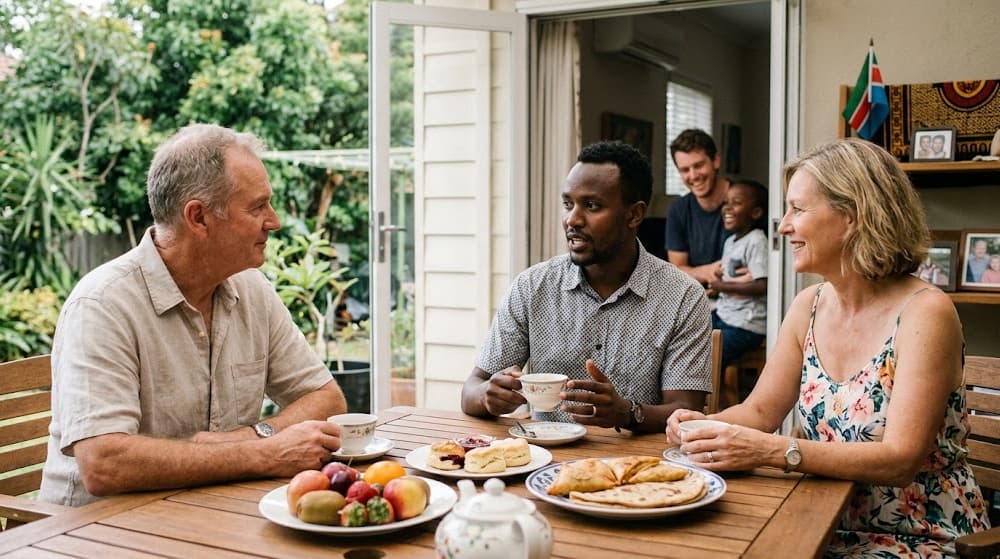
- Shared ground that does not demand erasure: Food, storytelling, music, and everyday moments of presence create belonging without asking anyone to abandon who they are. The shared table does not require you to forget your family’s recipes; it invites you to bring them.
Why this matters for Fabien Journey
This is one of the central pillars of my writing: cross-cultural connection. I am not interested in a world where everyone becomes the same, but rather in a world where difference is treated as a shared asset rather than a problem to manage.
A society that only accepts people after they have erased themselves is not unified — it is simply quieter. It loses new perspectives, new resilience, and new ways of understanding what it means to be human. Connection does not require sameness; it requires the courage, on both sides, to make space for one another. That is the kind of connection I want to keep exploring — and living — through Fabien Journey.
Share your perspective
Have you ever felt the tension between keeping your identity and trying to fit into a new culture or community? I would be glad to read your reflections.
Stories from the Road
Dispatches, discoveries, and new posts — sent straight to your inbox.