
The unexpected turn
For years, my life was defined by the classroom and the structured world of academia. I held my degree as a roadmap for the future—a clear path toward a specific professional identity. But life often has a way of folding the map and asking us to find our own way through the wilderness.
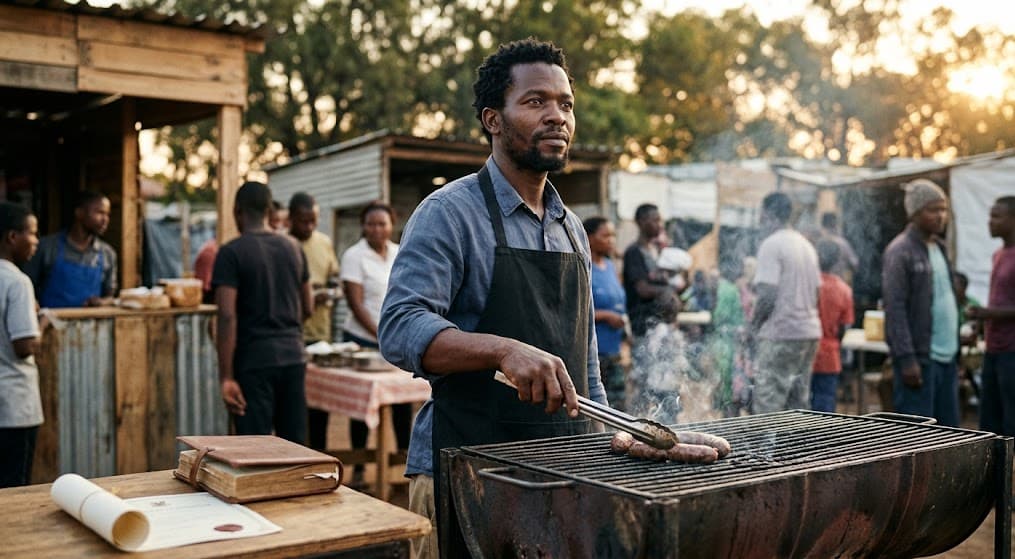
When that path shifted, the quiet of the library was suddenly replaced by the hiss of a charcoal grill and the steady rhythm of a meat cutter’s blade.
There were mornings back then when I still reached for chalk that wasn’t there. My hands remembered the weight of a marker, the smell of paper, the faces turned toward me waiting for an answer. But as the smoke rose, I was reminded that teaching had never really left me—it had simply changed its classroom. Every plate I served carried a lesson: that showing up matters, that consistency is a form of love, that even the smallest act of nourishment is a kind of instruction.
Understanding displacement and redefining the path
Moving from teaching to operating a grill in a displacement hub wasn’t the plan, but it became a powerful testament to endurance. When people ask what displacement means in sociology, they often point to economic instability, conflict, or systemic changes. But if you ask what displacement means in people, the answer is far more personal: it is the sudden rupture of your identity, your security, and your sense of direction.
Standing before the heat every day during that season taught me to bridge that gap. There was a specific kind of honesty found in physical labor. I wasn’t just preparing food; I was practicing the art of showing up. My degree represented what I had learned, but the grill represented who I was becoming. It was a daily reminder that professional titles are secondary to the integrity we bring to our circumstances.
The fire did not care what I had studied. It asked only for my attention, my patience, my presence. And in that demand, there was something strangely freeing. I learned that the hands can teach the heart things the mind was too proud to accept. I learned that sweat is honest, that fatigue is not failure, and that a meal made with care can restore more than hunger.
Navigating survival and systematic support
Transitioning into that line of work meant asking hard, practical questions that millions of people face when forced to start over. When your original career path breaks down, you naturally wonder: How do I rebuild? Can I work with welfare or social support while trying to get back on my feet? Is formal training like a food service worker program necessary, or do I learn simply by stepping into the heat of the kitchen?
In that camp, surrounded by others who were also navigating their own “shifted paths,” I realized that dignity isn’t found in the prestige of a job title or formal credentials. It is found in the hands that work to support a family and the mind that refuses to give up on hope.
I met teachers who carried water, engineers who mended tents, nurses who sorted supplies. None of them shrank. They expanded. They became larger versions of themselves—people who could hold sorrow and still serve, who could grieve a lost future and still feed a hungry child. That was not defeat. That was a quiet, daily heroism that the world rarely applauds but always depends on.
A message for your journey
If you find yourself in a season that looks nothing like you imagined—or looking back on a chapter that tested everything you knew—know that your value hasn’t changed. Whether you are holding a pen, a pointer, or a pair of tongs, your journey is valid. We are more than our resumes; we are the sum of our survival and the stories we choose to tell while we are in the heat of the struggle.
So do not wait for the old path to reappear before you begin living again. Build meaning where your feet are planted. Let the grill you once managed be a sanctuary, not a sentence. Let the degree be a foundation, not a cage. And when someone asks what you do, answer with your whole chest—because the work that keeps hope alive is never small, and the person who does it is never lost.
The path shifted. But you are still here. And that, in itself, is a triumph worth telling.
– Fabien
Stories from the Road
Dispatches, discoveries, and new posts — sent straight to your inbox.