
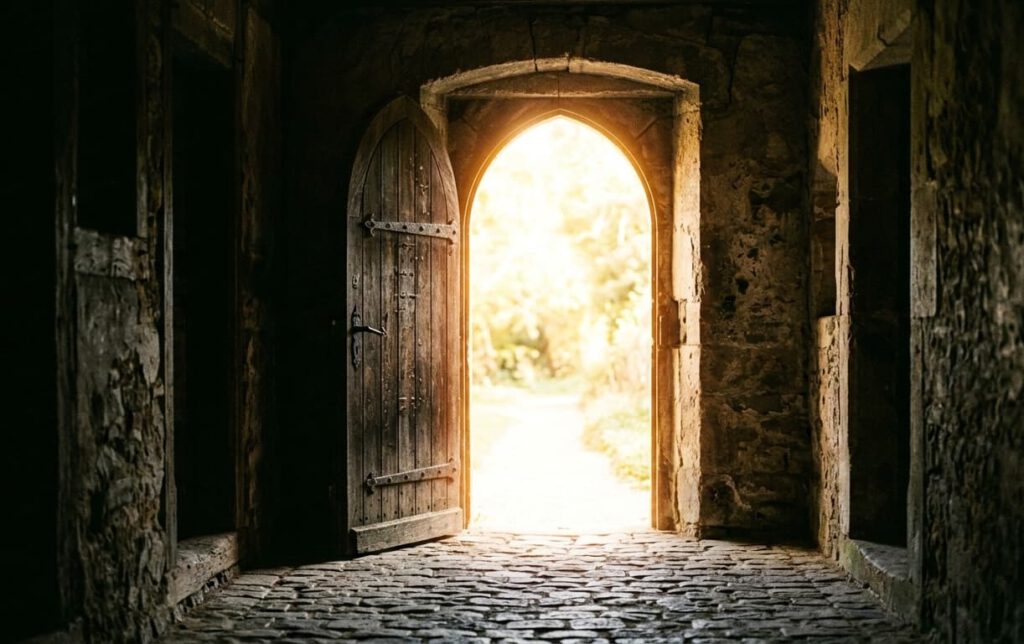
There is a walk I know very well. I could do it with my eyes closed, the route from where I am staying to the NGO office down the road. I’ve made it dozens of times. In the early morning before the staff arrive. In the midday heat. In the late afternoon when I’m hoping someone is still at their desk and still in a generous mood.
I make this walk to borrow their WiFi. Not to browse. Not to watch videos. I make this walk to build something — my blog, my courses, my future. I open a laptop, find a seat that doesn’t feel too much like an intrusion, and I work for as long as they’ll let me.
Sometimes they say yes. Sometimes they say no. Sometimes I am halfway through something and I am asked to leave. Then I come back the next day and try again.
This is not a story I planned to tell. For a long time, I thought it was too small — too ordinary. Surely resilience should look bigger than a man asking for a password. But I’ve come to think that’s exactly the point.
What nobody tells you about building in difficult conditions
When people talk about resilience, they often picture something dramatic — a person rising from rubble, crossing a sea, surviving something cinematic. And yes, displacement can look like that. It has looked like that for me, in moments I may write about another day.
But most of resilience is quieter. It is showing up to a door you were turned away from yesterday. It is not letting the no become the final word. It is learning to read a room — to sense which staff member might be kinder today, which corner of the office is least disruptive, how long you can stay before the atmosphere shifts.
I have become, without meaning to, an expert in borrowed spaces. I designed the first version of this website in one of those spaces. I completed online modules in web development, in writing, in digital storytelling — sitting in offices where I was sometimes welcome and sometimes merely tolerated. I wrote the first posts for Fabien’s Journey on a connection that wasn’t mine, in time that wasn’t guaranteed. And I kept coming back. Because the alternative was to stop.
Why I am telling this now
I am sharing this because I believe stories like this one need to exist in public. Not for pity, but for truth. Because the gap between what people imagine displacement looks like and what it actually feels like, day to day, is enormous.
People living in displacement areas are not passive. We are building, learning, creating, connecting — often under conditions that would stop most people before they started. We are not waiting to be saved before we begin. We are beginning anyway.
Fabien Journey exists because of that conviction. Every post on this blog was written under some version of these conditions — carved out of borrowed time, on a borrowed connection, by someone who refuses to wait for perfect circumstances. I did not build this blog despite my circumstances. I built it through them. And they are in every word.
If you are reading this, you have something I am still working toward — a stable connection, a safe place to sit, uninterrupted time. I don’t say that to make you feel guilty. I say it because I want you to understand what it means that this post exists at all.
It means someone walked a familiar road, sat down in a borrowed chair, and decided that their story was worth the effort of telling. I hope you think so too.
If this story moved you, share it with someone who needs to read it. Follow Fabien Journey for more stories of resilience, hope, and connection across cultures.
– Fabien
Stories from the Road
Dispatches, discoveries, and new posts — sent straight to your inbox.